Indigenous Cultural Heritage
Indigenous Peoples understand and describe “heritage” according to their own perspectives, traditions and languages. A general definition for Indigenous heritage would include ideas, experiences, worldviews, objects, forms of expressions, practices, knowledge, spirituality, kinship ties and places valued by Indigenous Peoples. Indigenous heritage is intrinsic to Indigenous well-being and held for all generations.
Introduction: Indigenous Cultural Heritage
The Truth and Reconciliation Commission marked a critical moment in Canadian history with the release of the 94 Calls to Action. These prompt each one of us to act and to reframe the familiar and comfortable contexts of our work as heritage professionals. It is now time to move the conversation forward as we explore authentic, sustainable pathways that will lead to new relationships and common goals and objectives.
Heritage BC is committed to heritage in all its forms. We recognize there is much to learn from each other, as we start to more fully appreciate the diversity of experiences and the multiplicity of perspectives that form the richness of Canada’s heritage.
The word “heritage” has no parallels in Indigenous languages, but the closest meaning is something that would be a translation of the expression “what we know”.
Based on discussions at IHC roundtables, the IHC describes Indigenous cultural heritage as ideas, objects, artistic expressions, practices, languages, knowledge and places that are valued because they are culturally necessary and meaningful, connected to shared memory, or linked to collective identity. Indigenous cultural heritage is not separate from Indigenous identity and life. It is inherited from ancestors as a gift to the next generations. It is the medicine we carry with us.
Each Indigenous Nation speaks for cultural heritage that is unique to them.
– Quote prepared by Karen Aird, Indigenous Heritage Circle
Indigenous Cultural Heritage Resources
Policies & Documents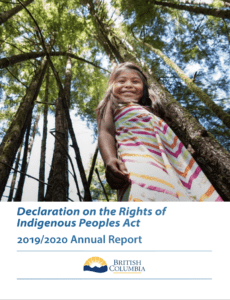
- Heritage Toolkit (First Peoples’ Cultural Council)
- Declaration on the Rights of Indigenous Peoples Act Annual Report (Province of BC, 2019-202o)
- First Nations Heritage Conservation Action Plan(First Nations Leadership Council, 2011)
- Guide to Heritage Stewardship for Yukon First Nation Governments(Yukon First Nations Heritage Group, 2018)
- A Selected Review of Federal and Provincial Legislation Implicating Indigenous Heritage in British Columbia (First Peoples’ Cultural Council, 2022)
- Indigenous Heritage and the United Nations Declaration on the Rights of Indigenous Peoples (Indigenous Heritage Circle, May 2022)
- Indigenous Living Heritage Canada – Approaches to Recognizing and Safeguarding ICH (CCUNESCO, 2020)
- Lower Nicola Indian Band Cultural Heritage Policy(2017)
- Management of Culturally Sensitive Materials (Museum of Anthropology)
- Report on Indigenous Gatherings on Cultural Heritage (Parks Canada, 2019)
- World Heritage and Indigenous Peoples: Operational Guidelines (UNESCO)
Reconciliation
“Collective efforts from all peoples are necessary to revitalize the relationship between Aboriginal peoples and Canadian society – reconciliation is the goal. It is a goal that will take the commitment of multiple generations but, when it is achieved, when we have reconciliation – it will make for a better, stronger Canada.”
– Truth and Reconciliation Commission of Canada
Reconciliation is about taking an honest and open-minded view of our history in BC to work towards inclusion and equality for all, and to establish respectful relationships among Indigenous and non-Indigenous peoples.
Reconciliation involves a humble recognition of the impacts of the colonial past, and the deep history and relationships that Indigenous people have on their lands. With that awareness and a spirit of cooperation, reconciliation offers the opportunity to change behaviour and bring healing.
Reconciliation is acknowledging, learning, listening and acting. It is doing the work required to bring equality and restitution.
Heritage BC recognizes reconciliation will not be achieved through a single process, but through an ongoing commitment to make things better through a range of actions that are carefully developed according to the needs and circumstances of each situation. Heritage BC believes we have a significant role to play in reconciliation: we aspire to create new partnerships to tell new, more inclusive stories.
Reconciliation Resources
 |
|
United Nations Declaration on the Rights of Indigenous Peoples (UNDRIP)
According to the UN, United Nations Declaration on the Rights of Indigenous Peoples (UNDRIP) is
“… the most comprehensive international instrument on the rights of indigenous peoples. It establishes a universal framework of minimum standards for the survival, dignity and well-being of the indigenous peoples of the world and it elaborates on existing human rights standards and fundamental freedoms as they apply to the specific situation of indigenous peoples.”
Cultural and intangible heritage is a key part of this framework, and the heritage sector working towards reconciliation with Indigenous peoples is an important part of the implementation of UNDRIP.
The Government of British Columbia has committed to adopting and implementing UNDRIP. More information on BC’s principles and policies can be found here.
Learn More about UNDRIP
- UN Declaration on the Rights of Indigenous Peoples
- Implementing the United Nations Declaration on the Rights of Indigenous Peoples Act (Government of Canada)
- United Nations Declaration on the Rights of Indigenous Peoples for Indigenous Adolescents
- FAQ on the Declaration on The Rights of Indigenous Peoples (Secretariat of the UN Permanent Forum of Indigenous Issues)