
Making a Case: A Framework
This is part one in a four-part series dedicated to empowering heritage advocates to develop and communicate a case for heritage
There are different theories and approaches to describing arts and culture values. We have selected one approach that is adaptable to the heritage sector and will help you develop a stronger ‘argument’ when making your case for heritage.
At its simplest, the approach asks you to describe value in three ways: intrinsic, instrumental, and institutional. Encouraging you to consider value from different points of view, these three elements can be thought of like the points of a triangle.
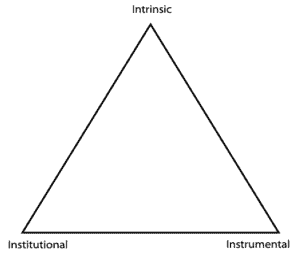
Intrinsic Value is subjective because it is expressed as intellectual, emotional and spiritual responses, opinions and experiences on an individual level. This approach is very well suited to cultural organizations and most of us are familiar with this type of value.
Examples are:
-
- “The museum exhibition was so inspiring, I now want to learn more about my community.”
-
- “I cannot imagine my community without its heritage – they are inseparable, and it is why I live here.”
Instrumental Value is typically expressed in figures and statistics of economic and social impact.
An example:
- “Every $1 invested in heritage generates $2 through spending and contributions to the GDP and taxes. With a 200% return on investment, investing in heritage only makes sense.”
Institutional Value describes your organization’s actions and the community’s experiences, or more simply, the value of your organization to your community.
An example:
- “By offering outreach activities to more than 750 students and offering free admission to everyone under 18 years, our historic site brings more than 1,000 young people into contact with our local story. These youth learn about our town and why it matters and this develops lasting social bonds with our community.”
When developing your case for heritage, we recommend you consider the intrinsic-instrumental-institutional triangle so that you are providing hard and soft evidence. Not everyone will be equally receptive to everything you have to say, but this approach increases your chance that everyone who receives your message will hear something that is relatable.
This is based on the work of John Holden. To learn more, please visit:
- How we value culture and arts (Youtube link)
- The Value Triangle (YouTube link)
- Resources by John Holden (link)
Next in Developing and Communicating Your Case for Heritage
 |
 |
 |