
Accessibility for Historic Places
Building codes are revised on a regular basis. Confirm current code compliance with local authorities or certified professionals before engaging in any work.
 Accessibility for Historic Places
Historic places are often seen as inherently inaccessible. While this is untrue in many ways, this attitude has led to a lack of access measures being implemented at historic places.
This guide, produced by Heritage BC on behalf of the Heritage Branch of the Province of British Columbia, seeks to arm the owners and managers of historic places with the tools to successfully enhance the accessibility of those places for persons with disabilities without damaging the heritage values and character-defining elements.
Download Accessibility and Historic Places
Download the Word version of Accessibility and Historic Places
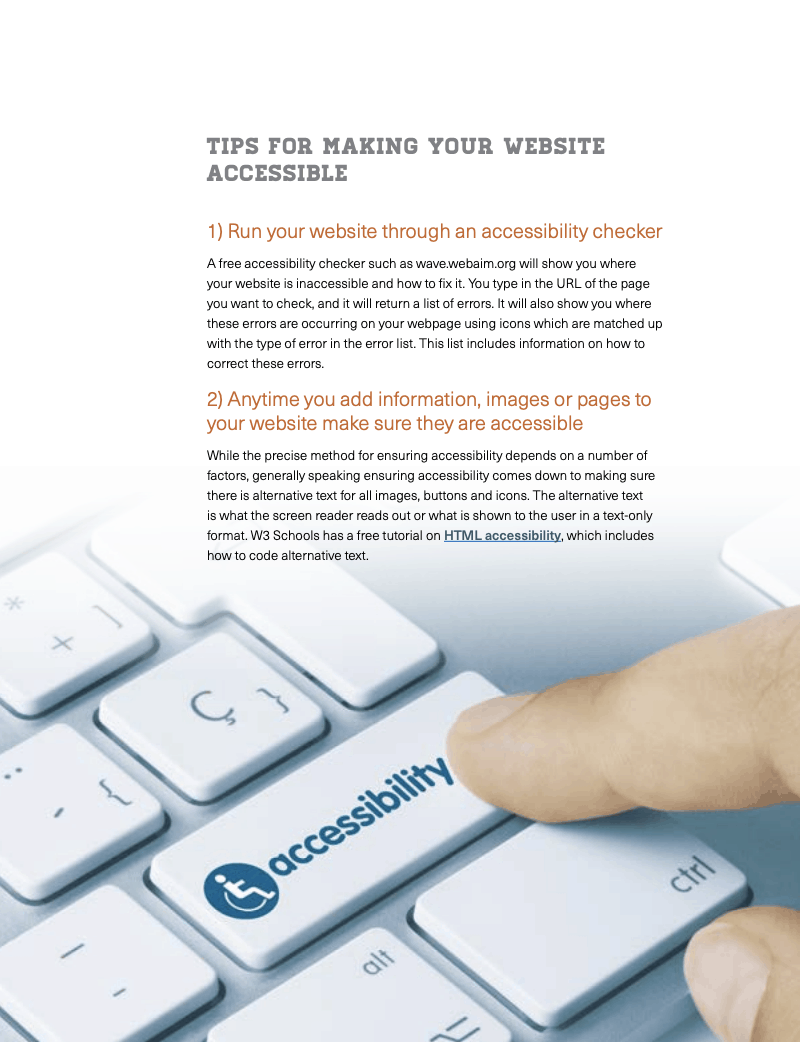
Websites and Accessibility:
A Supplement to Heritage BC’s Accessibility for Historic Places
Websites often rely on images and rich, colour-based design. However, this type of design is inaccessible to people with visual impairments or those with cognitive disabilities who experience sensory overstimulation or have difficulty processing certain types of information. People with disabilities may use screen readers or text-only programs, which often miss or misinterpret image links or infographics, for example.
Download the supplement: Websites and Accessibility
Download the Word version of Websites and Accessibility
Access Basics:
A Supplement to Heritage BC’s Accessibility for Historic Places
A fundamental goal of heritage conservation is to ensure access for future generations and people of all ages and abilities.
Heritage sites, as they were originally designed, present barriers that disable people. But with awareness and thoughtfulness, improved accessibility is possible even for the smallest of heritage organizations. This brief introduction to accessibility will not provide all the answers, but it will help you in identifying the questions and will support you as you improve access to your historic site.
Download the supplement: Access Basics
Download the Word Version of Access Basics
Other Resources to Improve Accessibility for Historic Places
Accessible Design in Digital Media
Making Accessible Media: Accessible Design in Digital Media is a course of study from Humber College Institute of Technology and Advanced Learning designed to educate Canadians on the importance and relevance of inclusive design and accessibility in media.
Making Ontario’s Heritage Accessible for Persons with Disabilities
Information prepared by The Ontario Historical Society
BC Building Access Handbook 2014
Commentary on BC Building Code access requirements.
Historic England’s Easy Access Guides
Guides for creating access to historic buildings and landscapes.
The Center for Universal Design
Center advocating for universal design at NC State University.
Design for All Foundation
European organization providing accessibility resources and support.
US National Park Service
Preservation brief on making historic buildings accessible.
Historic Scotland’s Managing Change Series
Guide to managing accessibility in the historic environment.
The Australian Heritage Council’s Improving Access Guide
Access guide focused on meeting the needs of persons with disabilities in the historic environment.
New Zealand Historic Places Trust Pouhere Taonga
Guide to providing physical access to historic places.